Do you need a permit for an egress window on Long Island? Yes, in every town, city and village we work in. Who issues it depends on where your house sits, so this page walks through who issues it in Nassau County and Suffolk County, with office details for the towns we have pages for.
Why Every Egress Window Needs One
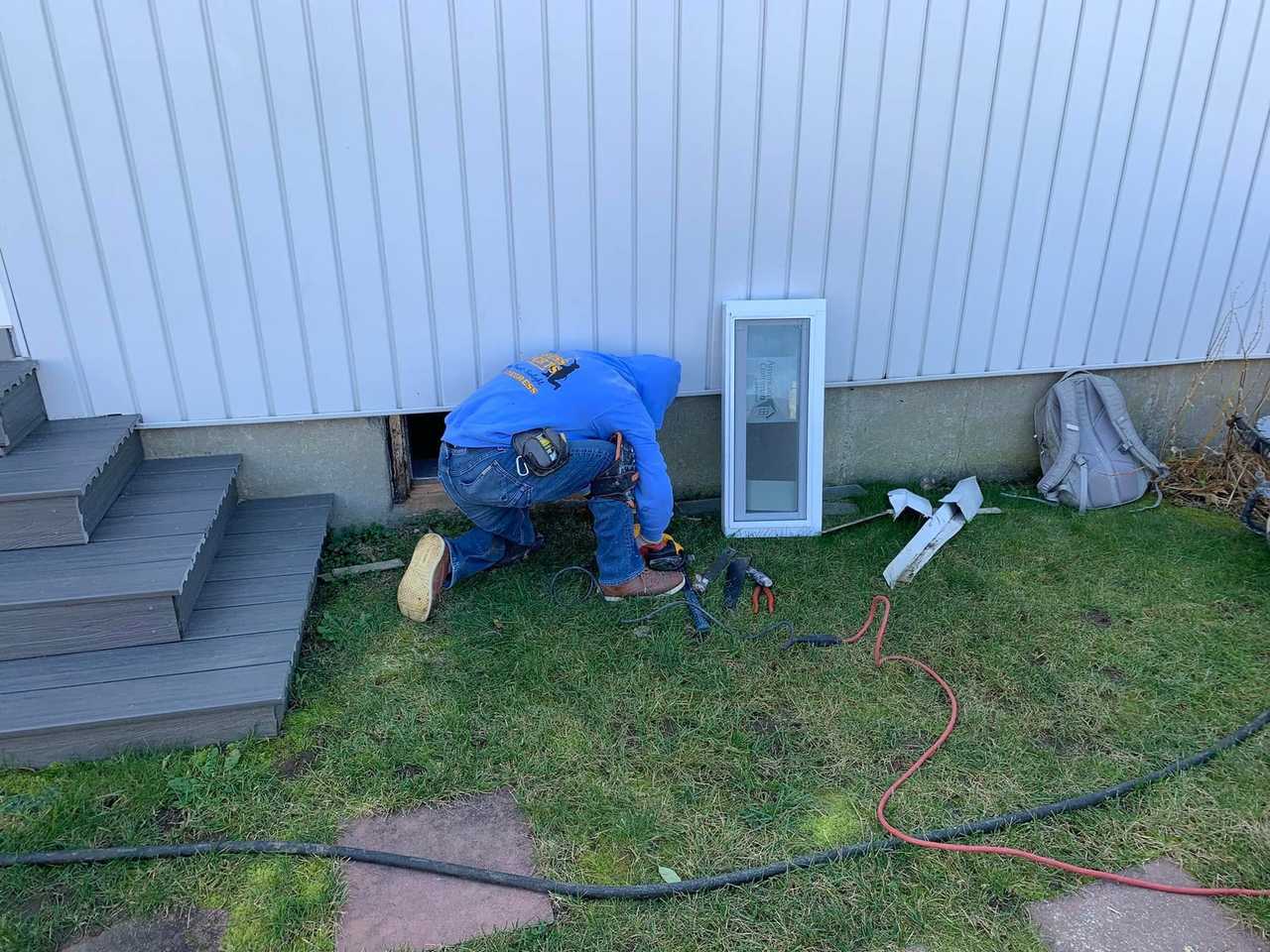
A new egress window isn’t a window swap. It means sawing a new opening into the foundation that holds up your house, and the NYS Uniform Code treats that as structural work that needs a building permit (19 NYCRR 1203.3). It applies to an enlarged basement window too, since that’s a new, bigger opening.
The rules the inspector checks against are the 2025 Residential Code of New York State, section R319, which took effect December 31, 2025. Long Island towns and villages enforce the state code. Your building department applies it to your house and has the final say.
Who Issues an Egress Window Permit?
It depends on where your house is, not on your mailing address.
- In an unincorporated area, the town’s building department issues it. In Nassau that’s Hempstead, North Hempstead or Oyster Bay. In Suffolk it’s one of the ten towns, from Babylon and Huntington out to Southampton, East Hampton, Riverhead, Southold and Shelter Island.
- In an incorporated village, the village has its own building department, and that’s where you apply. Long Island has dozens of villages, and plenty of homeowners don’t realize they live in one. The Nassau County and Suffolk County pages name some of them.
- In Glen Cove or Long Beach, the city building department handles it.
If you’re not sure whether you’re in a village, call the town and ask.
| Where the house is | Who issues the permit | Phone |
|---|---|---|
| Town of Hempstead (unincorporated) | Town of Hempstead Department of Buildings | (516) 538-8500 |
| Town of North Hempstead (unincorporated) | Department of Building, Safety Inspection and Enforcement | (516) 869-7660 |
| Town of Oyster Bay (unincorporated) | Department of Planning and Development | (516) 624-6266 |
| City of Glen Cove | City of Glen Cove Building Department | (516) 676-2000 |
| City of Long Beach | City of Long Beach Building Department | (516) 431-1005 |
| Town of Southampton (unincorporated) | Department of Land Management, Building and Zoning Division | (631) 287-5700 |
| Town of East Hampton (unincorporated) | Town of East Hampton Building Department | (631) 324-4145 |
| Town of Riverhead (unincorporated) | Town of Riverhead Building Department | (631) 727-3200 ext. 213 |
| Town of Southold (unincorporated) | Town Hall main line | (631) 765-1889 |
| Town of Shelter Island | Town of Shelter Island Building Department | (631) 749-0772 |
| Town of Babylon, Huntington, Islip, Smithtown or Brookhaven (unincorporated) | That town’s building department | Check the town |
| Any incorporated village | That village’s building department | Check the village |
Hempstead
The Town of Hempstead Code, § 86-9A, requires a permit to alter or enlarge a building, and only ordinary, non-structural repairs are exempt. Expect to file duplicate plans and surveys, and to have an inspection before walls are closed. Villages inside the town, such as Garden City, Freeport and Rockville Centre, run their own departments.
North Hempstead
North Hempstead exempts repairs only when they aren’t structural and don’t affect the required means of egress (Town Code § 2-9A), so an egress window needs a permit. Applications are filed online with plans sealed by an architect or engineer.
Oyster Bay
The Town of Oyster Bay takes applications through its online Building Division Portal, run by the Department of Planning and Development.
Glen Cove
The City of Glen Cove lists finishing basements and structural changes as permit work, and it says unpermitted work has to be disclosed when you sell.
Long Beach
The City of Long Beach requires a permit for “cutting any wall or portion of a wall” and for changes to a required means of exit. Nearly all of the city is a FEMA flood hazard area, and the city says not to start work in the flood zone without contacting the Building Department first.
Southampton
In the Town of Southampton the permit comes from the Building and Zoning Division of the Department of Land Management. Incorporated villages such as Westhampton Beach, Quogue and Southampton Village issue their own.
East Hampton
The Town of East Hampton Building Department takes all applications through its OpenGov portal.
Riverhead
In Riverhead, the Town Building Department issues the permit under the state code.
Southold
Southold issues the permit through Town Hall under the state code. Call the main line to reach the building office.
Shelter Island
The Shelter Island building permit application asks for two sets of stamped architect or engineer plans, a survey (which may be waived for interior work), an energy certificate listing window U-factors, and Suffolk County Health approval where required.
What Departments Typically Ask For
Every department has its own forms and checklist, so treat this as a general picture and check yours.
Most want a permit application with the property owner’s details. They usually want a drawing or plan showing where the opening goes, the window size and clear opening, the sill height, and the well with its dimensions. Some ask for a property survey showing where the well sits relative to the lot line. Some want the contractor’s license number and proof of insurance. A few want a plan stamped by an architect or engineer, especially if the cut affects anything structural.
There’s usually a fee. We don’t list fees here, because they vary by department and change. What the work itself runs is in the egress window cost guide.
The Inspection
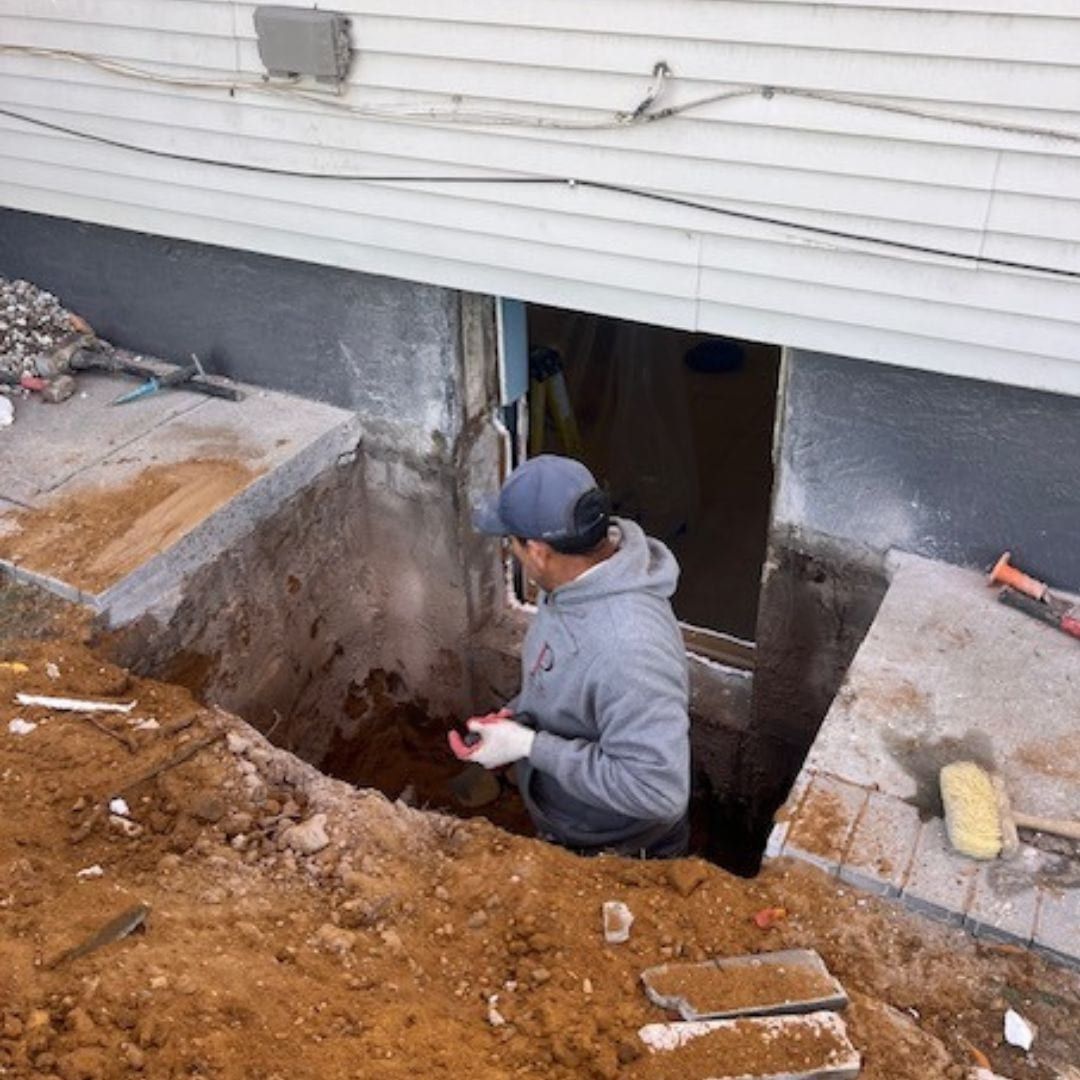
After the work is done, an inspector comes out and checks it against the code. Expect them to look at:
Inspectors measure the well too, so it pays to read egress window wells before the dig. Some departments also inspect partway through. When the work passes, the permit is closed, and that’s the record you’ll want when you sell.
| What they check | The code figure |
|---|---|
| Net clear opening | 5.7 sq ft minimum (5.0 sq ft only for a grade-floor opening, bottom of the opening within 44 in above or below the ground outside) |
| Clear height and width | 24 in and 20 in minimum |
| Sill height | 44 in maximum above the floor |
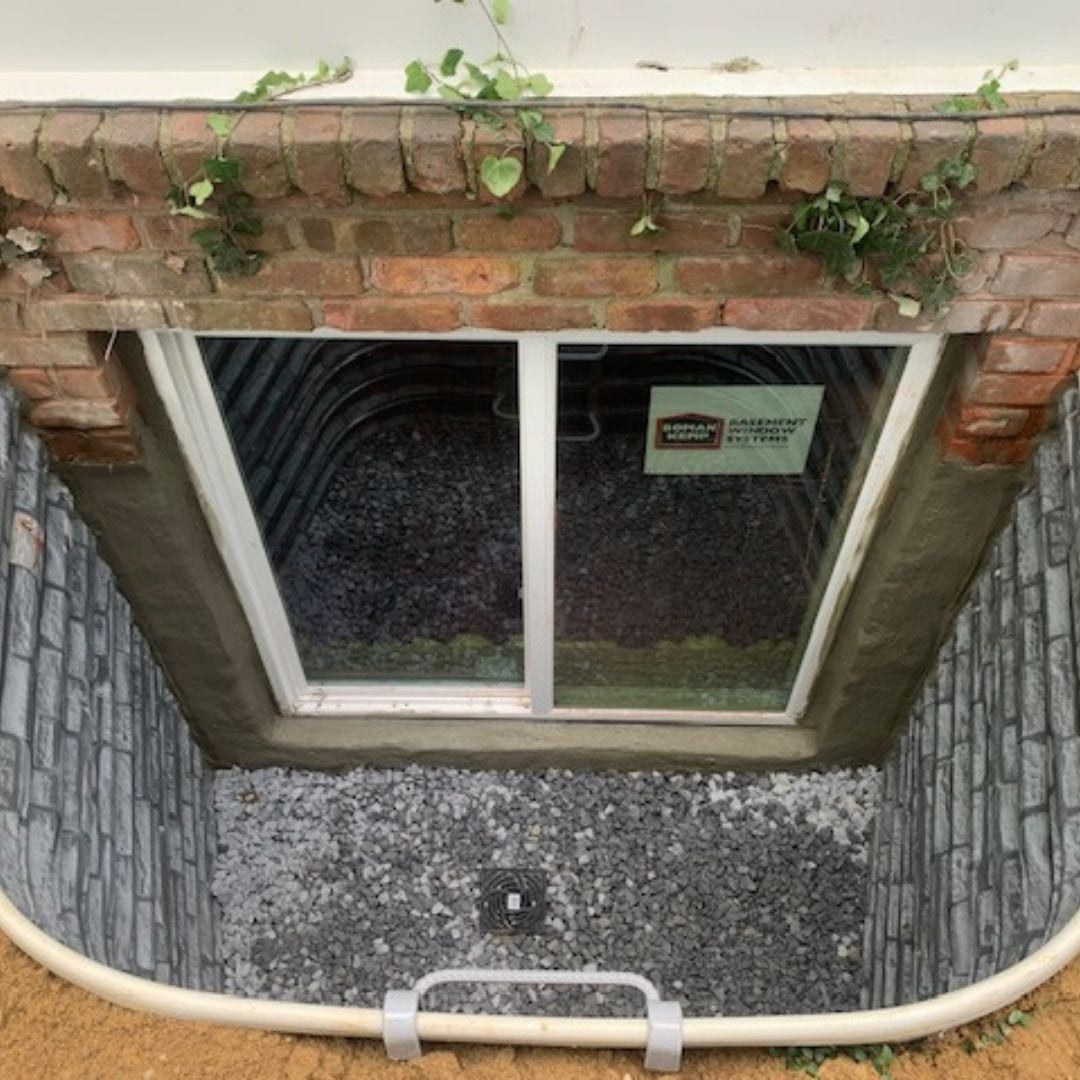
| Well | 9 sq ft area, 36 in projection and width |
| Ladder or steps | Required when the well is deeper than 44 in |
Planning Around the Permit
Get the permit sorted before you pick an install date. An egress window installation usually takes one day, but permit review takes however long your department takes, and that varies across the island.
If the egress window is for a bedroom, read basement bedroom egress. If it’s for an apartment, check basement apartment rules by town first. Each town writes its own rules, and most limit new units to owner-occupied homes or family members.
Questions about your town’s process? Call (516) 390-8891.
Do I need a permit for an egress window on Long Island?
Yes. A new egress window means cutting a new opening in the foundation, which is structural work under the NYS Uniform Code (19 NYCRR 1203.3), so it needs a building permit. It comes from your town, village or city building department. An enlarged basement window counts too, because the opening gets bigger. The finished work is inspected before the permit closes.
Who issues egress window permits in an incorporated village?
The village's own building department, not the town's. Long Island has dozens of incorporated villages, such as Garden City and Rockville Centre in the Town of Hempstead or Westhampton Beach and Quogue in Southampton, and each runs its own permits. If you're not sure your address is in a village, call the town and ask before you apply.
What do building departments ask for with an egress window permit?
It varies by department. Typically they want an application, a drawing showing the opening, the window and the well with their sizes, and details on the property. Some ask for a survey, a contractor's license and insurance information, or plans sealed by an architect or engineer. North Hempstead and Shelter Island, for example, ask for sealed or stamped plans.
What happens at an egress window inspection?
An inspector typically checks the clear opening, the sill height, the well size and any ladder against section R319 of the 2025 Residential Code of New York State. Some departments also inspect partway through, before walls are closed. Once the work passes, the permit can be closed, and that closed permit is the record you'll want when you sell the house.
What if my existing egress window was put in without a permit?
Call your building department and ask how they handle work done without a permit. Usually that means an application after the fact and an inspection of what's there. It tends to come up when you sell the house, and Glen Cove, for one, says unpermitted work has to be disclosed at sale, so it's better to sort out before you list.
- NYS Department of State, notice of adoption of the 2025 Uniform Code
- 2024 IRC section R319.2, ICC Digital Codes
- 19 NYCRR 1203.3, building permit requirements (Justia copy)
- Town of Hempstead Code, Ch. 86 Building Construction
- Town of North Hempstead Code, Ch. 2 Building Construction
- City of Glen Cove, Building Department
- City of Long Beach, Building Department
- Town of Shelter Island, Building Permit Application, July 2025
- News 12 Long Island, "Think the basement apartment is legal on LI? It depends on your town," August 2026
Last reviewed October 19, 2026.