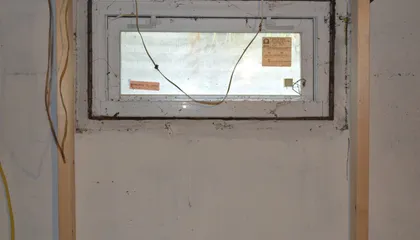
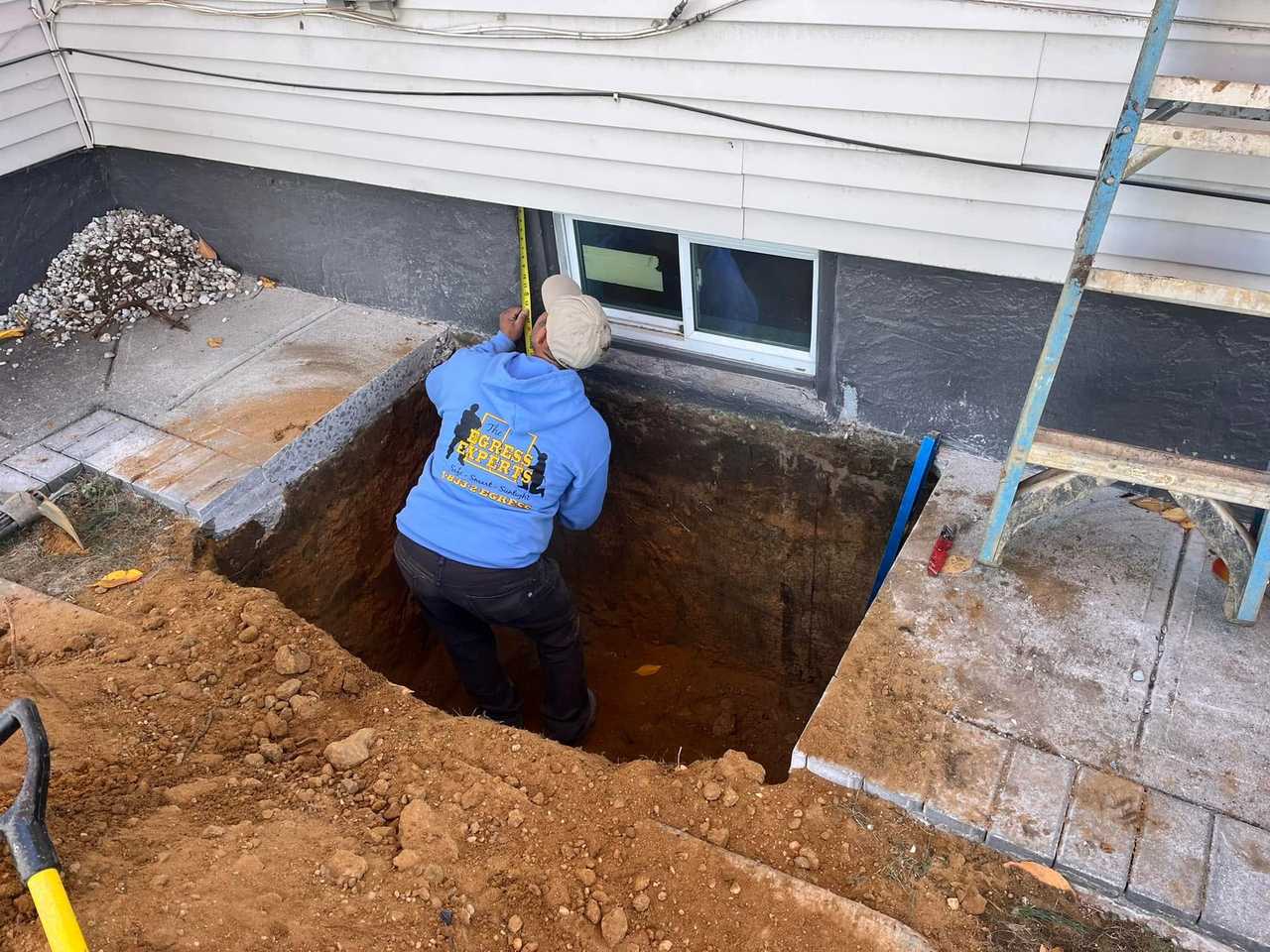
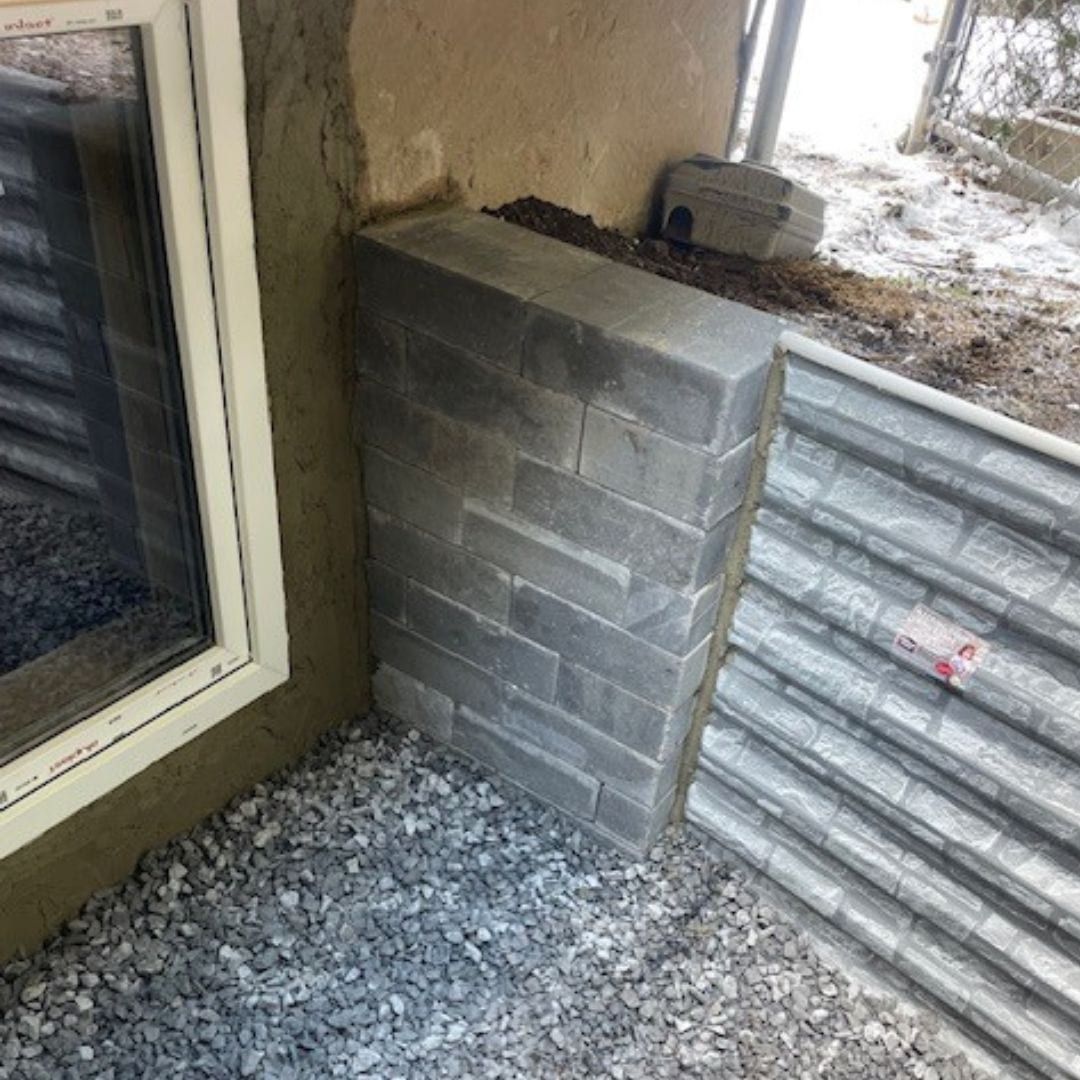
Masonry block
Concrete block laid in mortar, built on site to fit the opening.
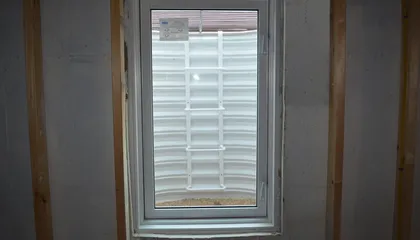
Boman Kemp galvanized steel
A factory-made corrugated steel well, made in set sizes.
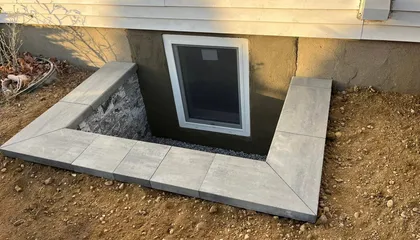
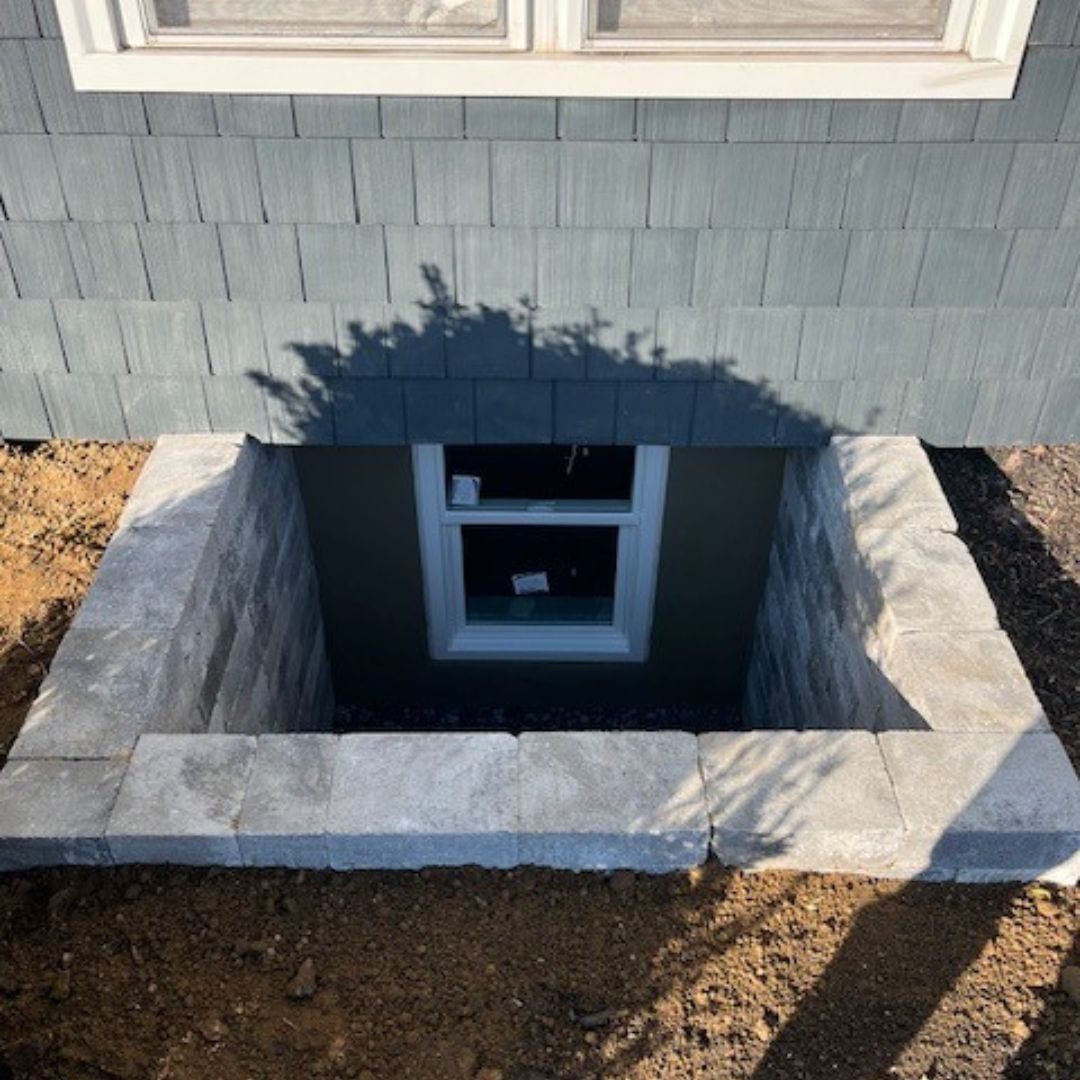
Cambridge ArmorTec segmental block
Wall blocks stacked in courses, built on site, with a finished hardscape look.
Egress window well requirements come from section R319 of the 2025 Residential Code of New York State, and every well we dig in Nassau County and Suffolk County is sized to them. Below are the numbers, the three well types we install, and a short note on covers.
How Big Does an Egress Window Well Have to Be?
An egress window below grade needs a well, and the well has its own minimums.
The window also needs room to open fully into the well. If the casement swings out into the well, the well needs room for the sash, which can push it past the minimum on a tight lot.
Check a well you already have with the egress window calculator. Your building department reads these rules for your job, and their reading wins.
| Requirement | Code figure |
|---|---|
| Horizontal area | 9 sq ft minimum |
| Projection out from the wall | 36 in minimum |
| Width | 36 in minimum |
| Ladder or steps required | When deeper than 44 in |
| Ladder rung width | 12 in minimum |
| Rung projection from the well wall | 3 in minimum |
| Rung spacing | 18 in maximum |
Window Well Types We Install
We build three kinds of egress well. All three meet the same code sizes. They differ in material, look and price, and the starting prices below are for the whole egress window job, installed.
Deeper wells cost more, and we confirm the price after a look at the wall. The egress window cost guide explains what else moves it.
Masonry Window Wells
A masonry well is built from block, right there against your foundation. A block well can be shaped to fit an awkward spot, such as a corner by a chimney or a narrow side yard, where a factory-made well won’t sit right.
Boman Kemp Steel Window Wells
Boman Kemp makes galvanized steel wells designed for egress windows (sometimes spelled Bowman Kemp). A steel well is made in a factory to set sizes, so it arrives ready to fasten to the foundation. Ask at the estimate which size fits your window and yard.
Cambridge ArmorTec Paver Block Wells
Cambridge ArmorTec is a segmental block system from Cambridge Pavers, the same kind of block used for patio walls. The units stack into a well that looks like part of the landscaping rather than a metal liner. It costs more and the price climbs with depth: the starting price covers a well up to 40 inches deep, and each extra 12 inches adds $1,100.
| Well type | What it is | Starting price, installed |
|---|---|---|
| Masonry well | Block-built on site | From $5,900 |
| Boman Kemp steel well | Galvanized steel, made for egress | From $6,500 |
| Cambridge ArmorTec well | Segmental block, stacked like a retaining wall | From $8,900 up to 40 in deep, plus $1,100 per extra 12 in |
Ladders and Steps Over 44 Inches
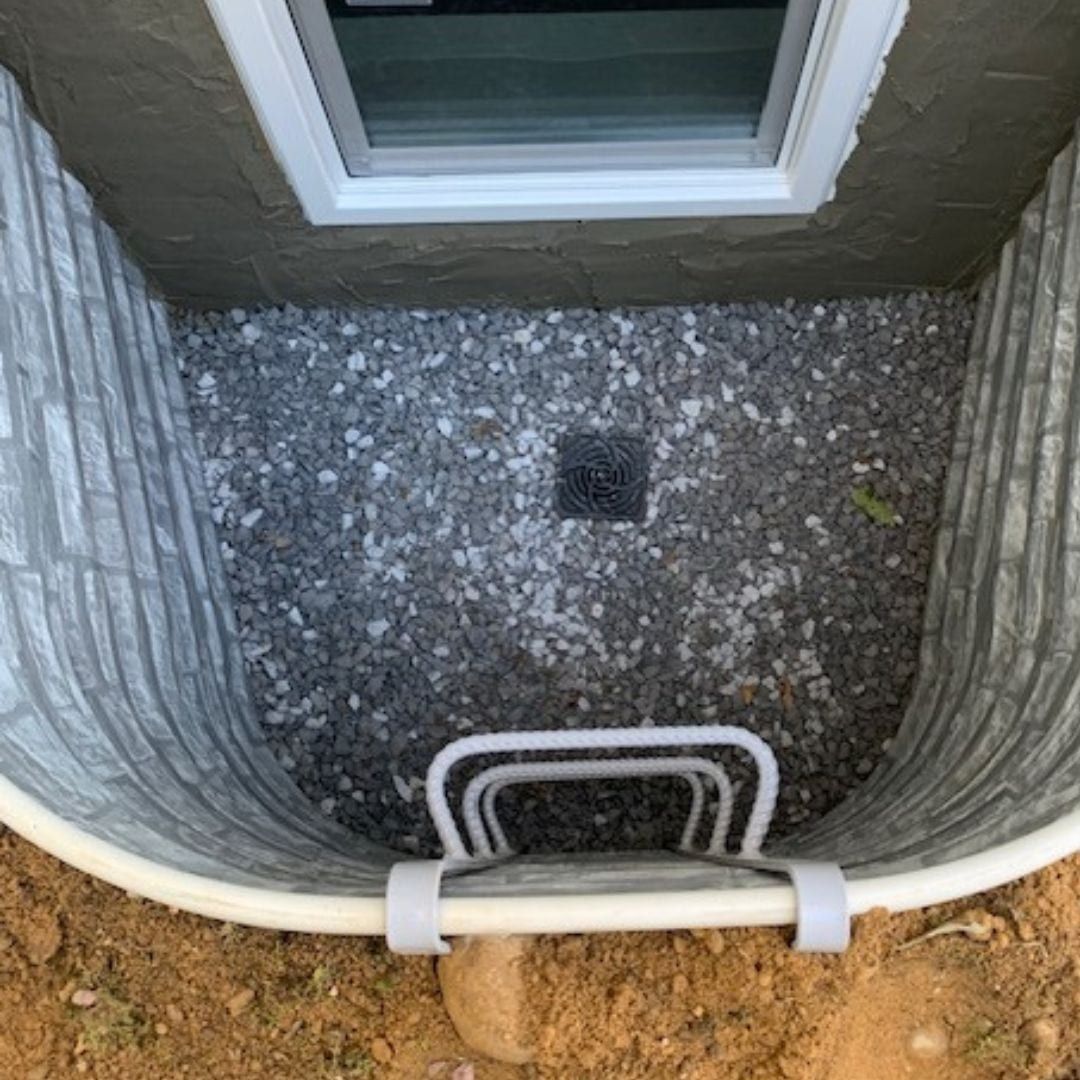
Plenty of egress wells end up deeper than 44 inches, because the window sill sits well below the lawn. Past that depth, a person climbing out needs something to stand on. The ladder or steps are attached to the well permanently, and they can’t block the window from opening fully. A deep well with a ladder is one of the things that moves the egress window cost.
How Do You Keep a Window Well from Flooding?
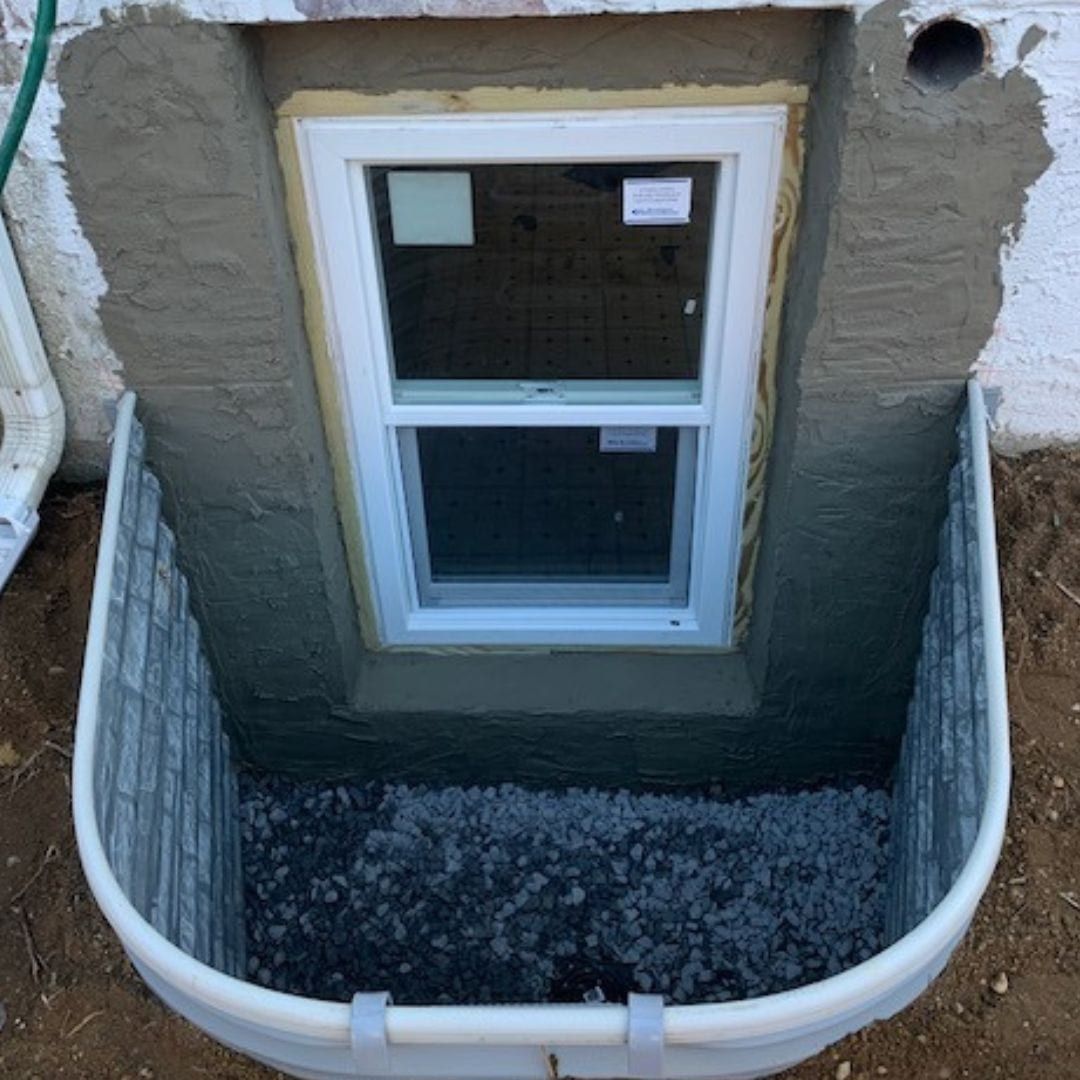
A well is a hole next to your foundation, so water is the thing to plan for. A proper install gives the well a bottom that drains, usually gravel, so rain soaks down rather than standing against the glass, and leaves the soil around it sloping away from the house. Ask us at the estimate how your well will be drained and backfilled.
Where the ground doesn’t drain well on its own, we also install dry wells and drainage systems, so the water that collects in the well has somewhere to go. We’ll tell you at the estimate whether your yard needs one and what it adds to the price.
Point downspouts away from the well too. A gutter emptying next to it will beat any amount of gravel.
Covers Over an Egress Well
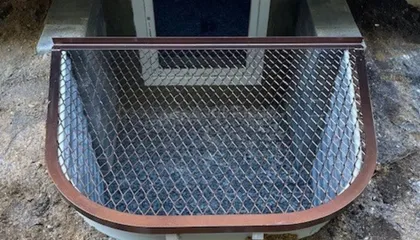
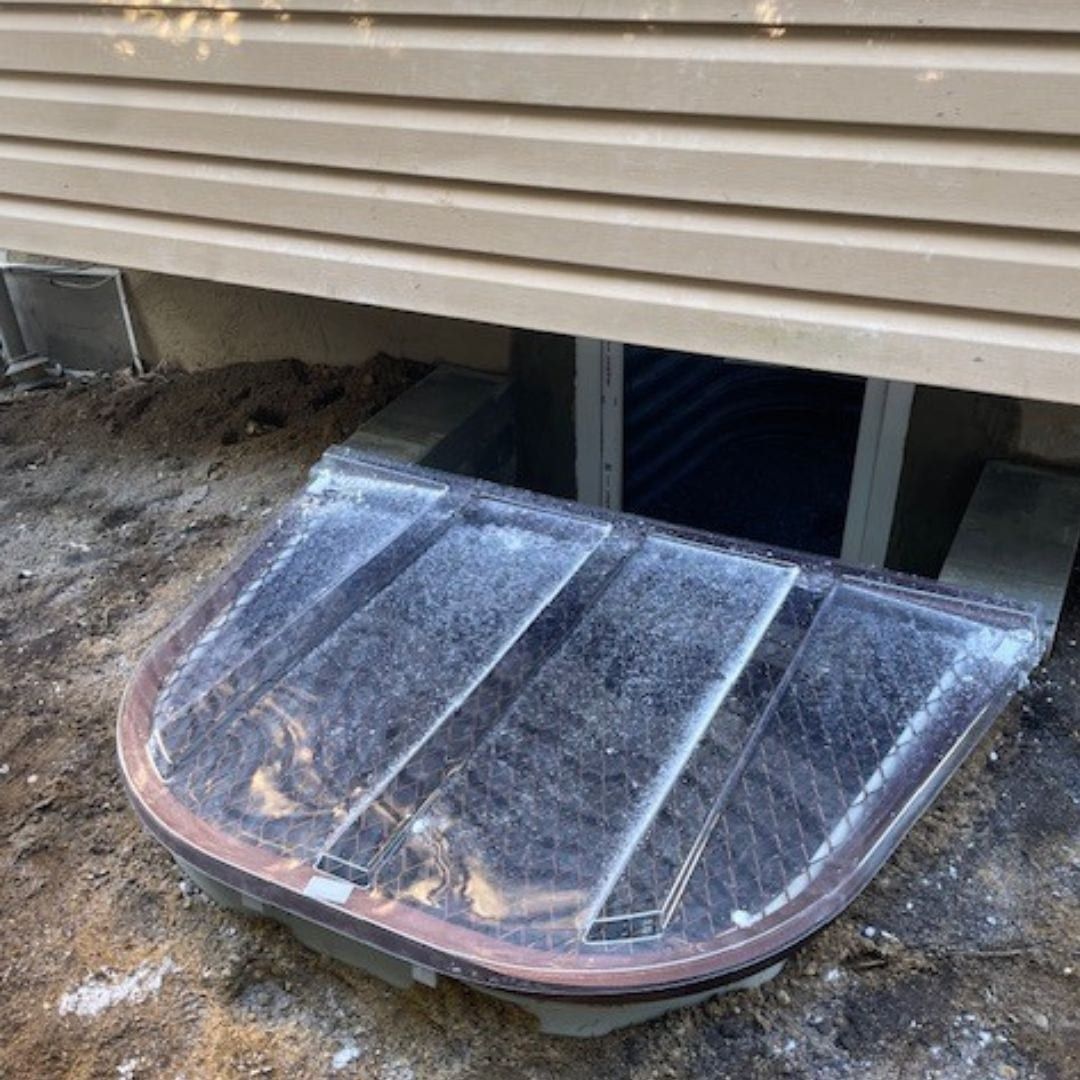
A cover is allowed over an egress well, but it has to lift or swing open from inside with no key, tool or hard shove, and it never gets locked or screwed down. Your building department can tell you what it accepts.
Our window well covers page covers the rest: new and replacement covers, which cover suits which well type, and when to replace one. Each basement bedroom needs its own escape opening, as basement bedroom egress explains.
Keeping It Clear
Check the well each fall and after big storms. Leaves, snow and toys collect in the bottom, and a well half full of debris drains slowly and is harder to climb out of. If the ladder rusts or comes loose, fix it, since it’s part of the escape route.
Wells Under Decks and Porches
A deck over a well is allowed if it leaves a clear path at least 36 inches high from the well out to the yard. If you’re planning a deck later, tell us now so the well goes where that still works.
Where We Install Egress Window Wells
We dig and set egress wells across Nassau County, from Hempstead and Long Beach to Oyster Bay and Glen Cove, and across Suffolk County, from Huntington and Islip to Southampton and East Hampton.
See the full egress window requirements or how the well fits into an egress window installation, alongside our other egress window services.
How far out does a window well need to be?
At least 36 inches out from the foundation wall, and at least 36 inches wide, with a floor area of 9 square feet or more. That's the minimum in section R319 of the 2025 Residential Code of New York State. If the casement swings out into the well, the well needs room for the sash, which can push it past the minimum.
When does an egress window well need a ladder?
When the well is deeper than 44 inches. The ladder or steps have to be permanently attached, with rungs at least 12 inches wide, projecting at least 3 inches from the well wall and spaced no more than 18 inches apart. They also can't stop the window from opening fully, which affects where in the well they go.
Do you need a window well for an egress window?
Yes, whenever the sill of the egress window sits below the ground outside. The well holds the soil back and gives a person the space to climb out. A window at or above grade, such as one on a walkout or a raised ranch's lower level, may not need one. Your building department decides for your house.
How do you keep a window well from flooding?
Start with the water you can control. The soil should slope away from the well, and downspouts should point away from it. A well usually has a gravel bottom so rain soaks down instead of standing against the glass. Where the soil holds water, we can add a dry well or drainage system, and a cover that sheds water helps, as long as it opens easily from inside.
Can you put a cover on an egress window well?
Yes, as long as someone inside the well can open it easily, without a key, a tool or special strength. A cover that's bolted down or too heavy to push up defeats the point of an escape opening. We supply new and replacement covers, which our window well covers page explains, and your building department has the final word.
Which window well is best: steel, masonry or paver block?
None is right for every house. A Boman Kemp galvanized steel well starts at $6,500 installed. A masonry well, built from block, starts at $5,900. A Cambridge ArmorTec segmental block well starts at $8,900 and has a finished hardscape look. Depth, the yard and what's around the well decide it, and we go over all three at the estimate.